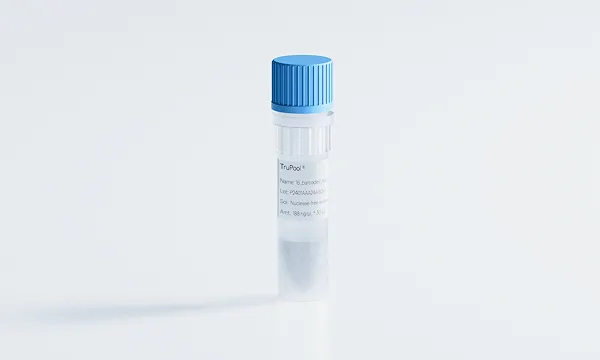
TruPool®
Oligonucleotide Pool

An oligo pool balancing throughput and yield

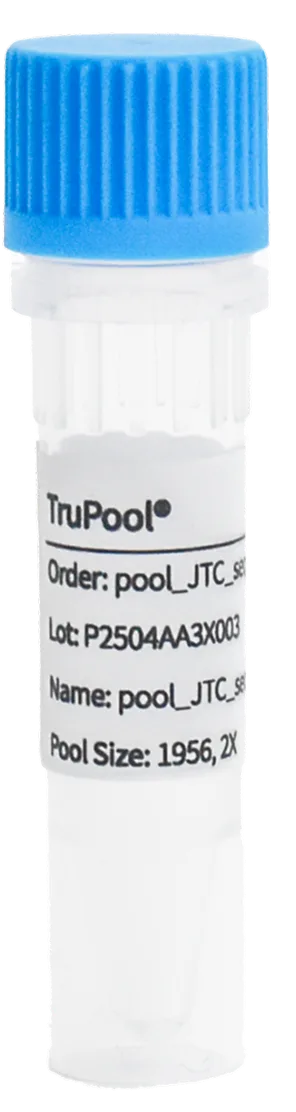
TruPool®
Oligo Pool

An oligo pool balancing throughput and yield

An oligonucleotide pool, or oligo pool, is a mixed library of hundreds to millions of customized oligonucleotides.
Oligo pools are manufactured and normally delivered as single-stranded oligonucleotides.
Oligo pools can also be amplified, error-corrected, and delivered as double-stranded DNA products.
Or cloned into universal or customized vectors and delivered as pooled plasmid libraries.

An oligonucleotide pool, or oligo pool, is a mixed library of hundreds to millions of customized oligonucleotides. Oligo pools are manufactured and normally delivered as single-stranded oligonucleotides. Oligo pools can also be amplified, error-corrected, and delivered as double-stranded DNA products. Or cloned into universal or customized vectors and delivered as pooled plasmid libraries.

Highlights

Throughput flexibility

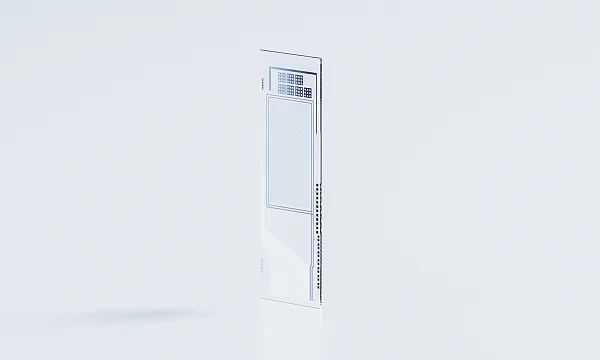
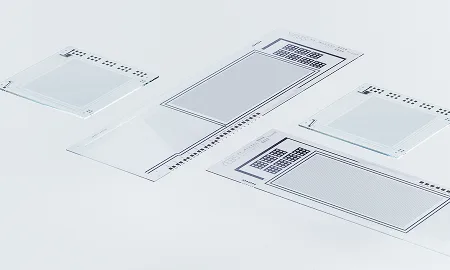
  • Multiple throughput specifications of TFT-DNA chips to support customization of different pool sizes

Throughput-yield balance

  • Higher per-oligo yield than commercially available CMOS electrochemical and inkjet-printed DNA synthesis routes

High precision [1] [2]

  • Coverage up to >99.9%
  • Error rate down to <0.4%/nt
  • World-leading electrochemical DNA synthesis quality

High uniformity [1] [2] [3]

  • Pre-amplification
    Q95:Q5 < 2.0X
  • Post-amplification
    Q95:Q5 down to < 3.0X


Support for sequence customization [4]

  • Support for degenerate bases
  • Support for special monomers
  • Support for 5′ modifications


Support for subpool segmentation [4]

  • 4K oligo pool can be divided into up to 16 subpools, with 256 oligos in each subpool
  • 59K oligo pool can be divided into up to 16 subpools, with 3,712 oligos in each subpool

Application Scenarios

  • Targeted NGS capture probes
  • Gene variant libraries
  • High-throughput antibody discovery
  • High-throughput aptamer discovery
  • AI-assisted protein design
  • CRISPR gRNA screening libraries
  • Lentiviral shRNA screening libraries
  • Factory-scale gene synthesis
  • Germplasm development and identification
  • DNA data storage

Product Category

Product
Category
Delivery
Form
Available
Customization
Yield
per Oligo
Oligo
Length
Pool Size Turnaround
Time
TruPool®
Std
• ssDNA, unamplified
• ssXNA, unamplified [4]
• 3'-OH
• 5'-modification [4]
• Condensed base [4]
• Special monomer [4]
Femtomole
scale [5]
30~
150nt [6]
• 4K Chip:
Up to 4,096 oligos per chip

• 4K Partitioned Chip:
Up to 4,096 oligos and 16 subpools per chip

• 65K Chip:
Up to 65,536 oligos per chip

• 59K Partitioned Chip:
Up to 59,392 oligos and 16 subpools per chip

• 16K/32K/120K/0.5M Chip:
Coming soon [4]
5~15
working days
TruPool®
dsMax
dsDNA,
amplified
• Amplification by subpools[4]
• Amplification according to chip partitions [4]
Picomole to nanomole scale 8~20
working days
TruPool®
Clonal [4]
Pooled
vectors
• Common vector [4]
• Customized vector [4]
Product Category TruPool® Std TruPool® dsMax TruPool® Clonal [4]
Delivery Form • ssDNA, unamplified
• ssXNA, unamplified [4]
dsDNA, amplified Pooled vectors
Available Customization • 3'-OH
•5'-modification [4]
• Condensed base [4]
• Special monomer [4]
• Amplification by subpools[4]
• Amplification according to chip partitions [4]
• Common vector [4]
• Customized vector [4]
Yield per Oligo Femtomole scale [5] Picomole to nanomole scale
Oligo Length 30~150nt [6]
Pool Size • 4K Chip:
Up to 4,096 oligos per chip

• 4K Partitioned Chip:
Up to 4,096 oligos and 16 subpools per chip

• 65K Chip:
Up to 65,536 oligos per chip

• 59K Partitioned Chip:
Up to 59,392 oligos and 16 subpools per chip

• 16K/32K/120K/0.5M Chip:
Coming soon [4]
Turnaround Time 5~15 working days 8~20 working days

Specifications

Oligo Pool Size Up to 4,096 or 59,392/65,536 per chip
Subpool Number and Size • 4K chip supports 16 subpools, each containing up to 256 oligos
• 59K chip supports 16 subpools, each containing up to 3,712 oligos
Oligo Length Up to 150 nt
Coverage >99.5%
Error Rate < 0.8% / nt
Pre-amplification Uniformity • > 90% of oligos represented within < 3.0X of the median
• > 99% of oligos represented within < 5.0X of the median
Available Modification • 3'-OH
• 5'-phosphorylation
Available Special Monomers • Condensed base
• Special monomer
Turnaround Time 5~15 working days
Oligo Pool Size Up to 4,096 or 59,392/65,536 per chip
Subpool Number and Size • 4K chip supports 16 subpools, each containing up to 256 oligos
• 59K chip supports 16 subpools, each containing up to 3,712 oligos
Oligo Length Up to 150 nt
Coverage >99.5%
Error Rate < 0.8% / nt
Pre-amplification Uniformity • > 90% of oligos represented within < 3.0X of the median
• > 99% of oligos represented within < 5.0X of the median
Available Modification • 3'-OH
• 5'-phosphorylation
Available Special Monomers • Condensed base
• Special monomer
Turnaround Time 5~15 working days

TruPool® Ordering Process

Place Order

Confirmation

Production

Quality Control

Delivery

Place
Order

Confir-
mation

Produc-
tion

Quality
Control

Delivery

Template File Versions

Universal template
Fills up to 65,536 sequences
Download
TruPool®
Sequence Template Guidelines

[1] Evaluated with 65K-throughput oligo pools at the length of 150 nt with a 10 nt UMI region. Oligo pools are amplified using 20 PCR cycles and sequenced with 40 million reads.

[2] Differences in oligo sequence and microarray design, purification, amplification, and sequencing library preparation protocols may also affect specifications such as coverage, uniformity, precision, etc.

[3] UMI counts and read counts mapped to each reference sequence are used to evaluate the pre-amplification and post-amplification uniformity, respectively.

[4] For availability and specific requirements, please consult our customer service manager.

[5] The data is contingent upon oligo length and the selected chip type. This evaluation is conducted on 65K throughput oligo pools at the length of 150 nt.

[6] Please consult our customer service manager if you are interested in oligo pools exceeding 150 nt in length.

Dr. Kang Kang

Partner & CBio

Dr. Kang received his Ph.D. in Bioinformatics and Systems Biology from the University of Hong Kong in 2018, then became a scientific co-worker of the Leibniz Association (Leibniz-HKI) and a visiting scientist at the Novo Nordisk Foundation Center for Biosustainability (DTU Biosustain) at the Technical University of Denmark. He was a scientist at BGI-Shenzhen and co-founded the synthetic biology research group. He was a senior bioinformatics engineer and brand advisor at WeGene. In 2021, Kang joined Biosysen Limited as a co-founder and served as Chief Informatics Scientist. He is also an advisor and author of the biotech media "Regenesis". He has been dedicated to the R&D and industrialization of OMICs technologies, high-throughput technologies, and synthetic biology for over 10 years. He joined LinkZill in March 2023, responsible for semiconductor life science tools and product planning.

康康   博士

合伙人兼首席生物信息官

博士毕业于香港大学生物信息和系统生物学专业,后任德国莱布尼茨协会科学合作者、丹麦科技大学诺和诺德生物可持续研究中心访问科学家。曾先后担任华大基因科学家,参与创立了华大基因合成生物学研究方向;微基因资深生物信息工程师、品牌顾问;倍生生物联合创始人兼首席信息科学家。他专注于合成生物学、组学和高通量技术10余年,同时也是生物技术领域颇具影响力的「行业KOL」。2023年3月加入领挚科技,负责半导体生命科学工具方向与产品规划。